Feeds:
Posts
Comments

If you play DVDs on your computer, you may notice that if you play a different region DVD, the computer may prompt you saying the region of the DVD is different, and whether you want to change the region of your drive to match.   In some cases you only have a limited number of times you can change the region before the DVD drive is locked to that region.

If the number of times is limited, then it is most likely that the hardware itself (the DVD drive firmware) is checking the region and checking the number of times you’ve changed the region.  This type of firmware is known as RPC-2.   Nearly all new DVD-ROM drives are RPC-2.

If it’s not RPC-2, then your drive is known as RPC-1, which means that the actual hardware isn’t doing any checking at all, but software or the Operating System (eg. Windows) is checking the region.

My Problem

So what’s my problem?  Well, I have a large number of Region 1 DVDs that I bought from US stores many years ago over the internet.   Trouble is, if I watched them, then watched Australian DVDs on my MacBook Pro, I’m very quickly going to run over the 4 region changes I had left.

Possible Solutions

 Luckily there’s quite a few clever people out there, and to my knowledge, there seems to be a few options:

  1. Buy an external drive for the other region.   Costs more money and means you’ve got another device hanging off your computer. 
  2. Patch your drive to an RPC-1 firmware if available.   Some clever people have “hacked” the RPC-2 firmware for a drive to an RPC-1 firmware.   However, not all drives have been done, so this may not be an available option for you.     Flashing your drive is risky, voids your warranty, and if something goes wrong, there is a possibility that you will render your drive useless.   Also, having an RPC-1 drive means that your software may still be checking regions, which means you may need to run a software utility to reset the region.
  3. Patch your drive to an RPC-2 auto reset firmware.  The next best thing is an Auto Reset patch.   What this means is that your drive is still RPC-2 (the hardware will still check the region and you have 4-5 times to change the region), but every time you reboot your computer, the count and region will reset to whatever you had it when you patched your drive.   Patching your drive is risky, voids your warranty, and if something goes wrong, there is a possibility that you will render your drive useless.    Also, I’ve read that the memory on your drive may only support a number of region changes until it gets “damaged”.  
  4. Run a DVD viewing program or DVD-ROM utility that can get around the region encoding.    I don’t know how these work, but I’m guessing they read the raw DVD-ROM data and then pretend to be a DVD-ROM in another region on the fly so you never have to change the region of your hardware.   
  5. Rip the DVD movies and convert them into another format using software like Handbrake or MacTheRipper.   This works because Mac OS is still able to read the DVD as a DVD-ROM disc and show the individual files on there as if it was a data disc.   Since the computer has not got to the stage of trying to interpret the files on the disc and playing the movie, the region checking hasn’t kicked in yet.    However, this method is obviously slow and not useful if you want to bring a stack of DVDs on a trip with you.   I’m also doubtful of the legality of this option.


What did I do?

As I have quite a few Region 1 DVDs, and my drive doesn’t seem to have an available RPC-1 patch, I tried patching my drive with an RPC-2 Auto Reset patch.

I worked out that my MacBook Pro has an LG DVD-ROM GS23N drive with firmware model SB00-01.   DO NOT follow the instructions below if your computer and drive don’t match this.  However, you may be interested in reading the steps aas they may be similar to the procedure you’d need to carry out on other computers/drives.

Unfortunately, the patching software needs to be run in Windows, so the first thing I did was install a trial version of VMWare Fusion and install Windows inside it. 

  1. Download the original firmware for your drive from here:  http://files.rpc1.org/index.php?act=category&id=1823
  2. Download Media Code Speed Edit (MCSE) from here: http://www.videohelp.com/tools/MediaCodeSpeedEdit
  3. Run MCSE
  4. Click the Load button and select the firmware exe to load it 
  5. Check the RPC2 Auto Reset checkbox
  6. Click the Save button and save the modified firmware with a different name, eg. GS23N-SB00-01_speedpatched
  7. Run the new firmware executable
  8. Click the Update button
  9. You can click the Reboot button, but you really want to reboot the whole Mac, not just the Windows VM
  10. Reboot the Mac

Testing it out

Now, to test it out, I used DVD Info X to verify that my drive was in Region 4 with 4 region changes left.


Then I inserted a Region 1 DVD and used the in built Mac DVD Player.   The dialog box came up asking me if I want to change the region. 

I set the region to 1 which then allowed the movie to be played.   I used DVD Info X to verify the drive’s properties again and it confirmed that the drive had been changed to Region 1

However, after a reboot, all was back to normal.


Additional links if you’re interested:

http://www.dvddemystified.com/dvdfaq.html

http://forum.rpc1.org/viewtopic.php?f=12&t=45694

http://forum.rpc1.org/viewtopic.php?t=15294

It has come…  that line has been crossed.

When our kids were younger (eg. toddlers), they really only listened to music that we put on.  They might have liked some of the music I liked.  They might have not.  But their music universe was mostly contained/restrained by what Wifey and I listened to and the TV/movies we watched together.

However, this year, I think our little Miss 10 has started her music revolution.

A few things:

Writing out lyrics

I remember going through a stage where I started writing out lyrics to pop music in a notebook.  I don’t know why I did it.  Maybe to learn some lyrics of pop songs.  But in my daggy youth, I must have thought that it was a step to making me cooler.  Or something. 

The funny thing is that when I found out Wifey went through the same stage too!  But she had files and files of lyrics that she had written out by hand when she was a kid.

And just a few weeks ago, Miss 10 started in earnest writing and printing out lyrics to songs – both from her own singing lessons, but also pop songs.  Wifey and I just looked at each other and smiled…

New Music

That universe of music controlled by us?  Gone…  Miss 10 has bought pop music THAT I HAVEN’T EVEN HEARD OF by an artist I HAVEN’T EVEN HEARD OF in iTunes!!!  Am I just getting older and daggier?  Maybe :)    But the scary thing is that through her friends at school or media, she is getting exposed and getting excited to new music. 

Reminds me of the days when I would actually listen to the Top 10 countdown on the radio :)

Playlists – the Mix Tape of the 2000’s

Anyone made a mixtape?  I thought it was hilarious that the Avenue Q musical had a scene where someone made a mix tape for someone else.  This was how it always was!!  I made mix tapes for myself, but funnier, I made mix tapes for my Wifey when we were going out..  and she made me mix tapes too! 

Anyway, digressing, I picked up Miss 10’s iPod today and noticed that she had made her first playlist… this generation’s mix tape. 

And the funny thing – I’ve been listening to the playlist all today!  It’s a good combination of pop songs (and even includes that pop song I hadn’t heard of previously).
Ahh… growing up.

Apple iPad Thoughts

The iPad has been launched!  Yes, it looks like a giant iPod Touch.  Unfortunate name (but then again, look at the Nintendo Wii).   But I think it looks great and I want one now! 

But I’ve read a lot of iPad hate comments out there on the web today.  It’s not a PC, my iPhone can do that, my netbook can do more, I can only run Apple endorsed apps, it doesn’t multitask, even, there are other touch PCs out there that are “better”, etc.

I still think the iPad will be a success because it will fill a niche and grow (and of course of all the Mac fanboys out there!).

Arguments

Let’s take the PC argument.  Yes, it’s not a PC.  But it’s not trying to be.  Apple would have discontinued its entire line of laptops and desktop PCs if the iPad was the only device you’d need.  But they haven’t.  I’ll still need to use a PC/laptop for advanced photo and video editing, or sound recording, etc.  No way Lightroom is going to run on the iPad.. yet…

How about the iPhone argument?  Yes, the iPad can’t fit in your pocket.  But neither will you try to fit a netbook in your pocket either.  I don’t think Apple intended it to be a mobile phone somehow.   Actually, if I had an iPad, I’d have to carry it in a small laptop bag/sleeve, and then, only for certain situations – like a video player for the kids on a long car or plane trip.  I’d still need the iPhone for day to day in your pocket commuting.   

Now what about netbooks?  Of course there will still be netbooks, just like how there are still Windows CE mobiles, or even other mobile phones even though the iPhone exists.  But the iPad will eat into the netbook market share.   Netbooks are really just for surfing the web and checking email.  The iPad can do just that, looks cooler next to your latte, and the price is quite competitive.  Just like how you didn’t see netbooks in cafes 3-5 years ago, I think people will be flashing these in cafes in 3-5 years time instead of netbooks.

Then there’s the comments that users will be stuck with Apple apps only whereas on a netbook you can run anything you like.  This is such a technology focussed argument, and not a user needs argument.  I think people have to ask what do they want to DO on their netbook, instead of what application do they want to run.  OK, there’s no or not much choice – you’re stuck with Apple Mail and Safari.  But who cares?  It works – I’ll still be able to check my email and surf the web and check Facebook and Twitter.   And then there’s Apple’s App Store.  I’m keen to find out what weird Windows application people find compelling to run on their netbooks that isn’t available on the App Store.

The argument should really be about lack of choice – but if you buy an iPhone/iPad – you’re buying one with the knowledge of how the platform works, and that you’re stuck with those choices.   But in my opinion, I’d rather an Apple endorsed and controlled App Store than thousands of free Linux applications that are not polished or easy to use or seemless.

Now, onto the multi-tasking argument.  Yes that sucks.  But I thought more about it.  Hasn’t anyone run so many Windows applications that the task switcher is 2-3 rows deep and the task bar is jammed with applications?   Is this manageable?  No.  Are there CPU cycles and battery life being wasted keeping all these applications running in the background when I only interact with one at a time?  Yes.  

What if CPUs came faster and faster (which they will), and switching from one application to another is nearly instantaneous – and it restored the last state of the last application?   Wouldn’t that “appear” to be multi-tasking?   I’m not a big buyer of the multi-tasking argument.  It’s not like I’ll be checking my email WHILE watching a video.  I’d want to watch the video.  Switch to look at my mail.  Then switch back to the video.  As long as the switching is very fast, it’s easy to switch between the applications, and video picks up where it was before, or applications or data can be downloaded in the background, I don’t really see the problem.  

Maybe the key is the effort required to switch between applications.  I guess that’s what the home button is for.   But I also know that on my Windows 7 laptop here, I often spend a while trying to find the application I want to switch to because I have so many running at once!  As far as I understand, the iPad will still allow Apple core services to multi-task in the background, so you should be able to get new mail notifications (and other notifications like Facebook ones?).   Maybe Apple needs a “recently used” list of something. 

As for other touch PCs that already exist that are “better” – well, again back to the iPhone argument – there are heaps of other mobile phones out there, but Apple managed to design one with the right aesthetics, right functionality (and right marketing) to make it work.  I’m sure they can do that again with the iPad.   Heck, that argument even works with applications and games in the App Store now!  There are usually multiple applications that do the same thing, but one usually sells much more than others.  It’s not WHAT you do, but HOW you do it :)

Shortcomings

I am disappointed that there’s no camera.  Why couldn’t they put a camera on it?  There are little cameras out there that have the iPad’s resolution of 1024×768.   Then you could use the iPad for video conferencing with your family or friends which would be awesome or PhotoBooth type applications. 

Also, I wonder if they should have included a stylus and hand writing recognition.  Maybe something that can be added on later, but I would imagine that would make the iPad excellent for note taking in lectures or meetings.  Did they even look at uni students and what they may typically need from a computer as a use case actor? 

The last thing that it’s missing is a memory card (SD/CompactFlash) and/or USB slot.  Then the iPad could make a dent in the portable media backup device market.  I could then leave the laptop at home on long holidays as I would be able to download photos from my camera onto the iPad.  Actually, if it had more than one, then it would open up being able to add additional memory to the iPad easily in the future.

Why would I buy one?

So why would I buy an iPad when I already have a laptop and an iPhone already?   For our family at home, we’ve transitioned one of our MacBooks into a nearly iPad role.  It sits in the kitchen, we look up recipes on it online, Wifey checks her email and Facebook, we check the weather and we surf the web on it.  That’s about it.  It’s a “kitchen” / family room computer.   It does take up some space with the keyboard, but an iPad that perhaps is docked onto the fridge or a kitchen wall would be ideal.  We could then undock it to look at photos or videos or surf the web on the family room couch if we need.   Actually, the iPad would be excellent as a kitchen computer.

Now, just to wait…

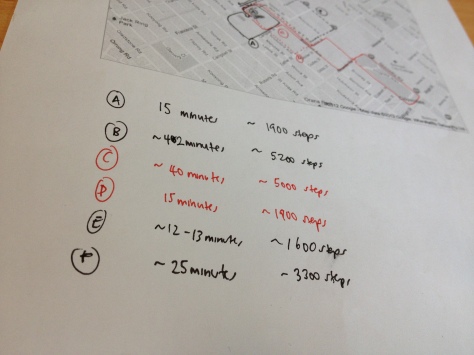
Well.. not that big..  last weekend I decided I’d had enough of 10-12 km rides to and from work, and wanted to go further.

So, on Saturday, I hopped on my mountain bike and cycled 26kms – to City Beach and back home.  I was very proud with myself – I could actually cycle to the coast!  I did the advertised City to Sea ride which looked quite easy on the map, but that Underwood Ave and then Oceanic Drive hills were killers!  I like how the guide says “… Oceanic Drive.  This is a slight incline where you will pass the Bold Park Administration buildings…“   Slight incline?  HA!

I did get a little lost around the Subiaco area.  I think after Centro Ave I went down Harborne Street instead of taking the first left onto Upham Street.   I’ll learn next time.

But I had the cycling bug, so I went out on Sunday again – but with 2 others to Claremont along the foreshore and back along the trainline – 28kms total.  It was a fairly flat ride compared to Saturdays.    But the thing I most liked was riding with others – it’s much more fun and safe and it ends with a coffee!  I was led through different routes I hadn’t used before, and I felt “safer” knowing there were others there with me.    OK, my average speed is still around 20km/h (sorry guys for holding you back), but I’m still just starting – and I have a heavy mountain bike frame with smallish wheels!  Yeah..    it’s ALL about the bike Lance :)

Sunday's ride

I’ve recently spotted signs advertising the HBF Freeway Bike Hike for Asthma.  The intermediate course is 30kms and there is a start category for people < 20km/h.  That’s my next goal – I’m assuming the freeway is pretty flat, but I just have to work on my distance so I don’t die at the end!  Luckily, the website seems to have a suggested cycling training program that I’ll give a go.

The Past

A few years ago I tried to build a MythTV box.   Which obviously meant playing around with Linux.   (For those who haven’t heard of it – MythTV is basically a software program that makes your PC be like a PVR.)   Back then, it was my third time playing with Linux, so I knew the basics, but after a month of trying to get my TV card (homebrew drivers!), graphics card (never seemed to work right), wireless card and networking (what!  text files calling iwconfig!?!?), sound card (ALSA?), TV Guide and other stuff working, I just gave up.  It was just too hard.

I was spending hours configuring text files for X and networking and other things without really knowing what I was doing…  I was trying to get Linux to work by Googling.    I really think a lot of this stuff should be able to be configured without having to go to the command line.  I know it may sound totally noobie, but why does Linux have a plethora of text configuration files?   It’s been around for so long, you’d think someone would have made it easier to use.

Anyway, just recently my old Dell Inspiron 630M laptop’s Windows install got corrupted, so I thought – why not try and make it a MythTV box for playing videos now that my PS3 is out of service for a while.

After all, things should have improved in 4 years right?   Yes… and no..

Installation

To save time, I looked for a distribution that was tailored with both the OS and MythTV.   I decided to get Mythbuntu, downloaded it, burnt the ISO onto a CD, popped it in and rebooted.  No problems – it came up with the Live CD version of the OS and asked me if I wanted to install the OS onto the Hard Drive.   I said yes and was pleasantly surprised with the usability improvements in the setup.   The partition tool worked with no problems, I just had to choose easy things like timezone and user account name.

Thumbs up to the Live CD concept.

MythTV Initial Setup

But once it came to MythTV configuration, things went too hard again.   This time I have no TV card, so that’s one thing to not worry about.   But lately I’ve converted a lot of the kids’ movies onto an external USB hard drive.   I want to be able to play the movies off that in MythTV.

Unfortunately, in MythTV’s initial configuration, I was faced with ’Videos’ Storage Group Directories with a default setting of /var/lib/mythtv/videos.   To the average user – what the heck is that?   Why isn’t there a folder picker here?   What is the path to my USB hard drive?   Why can’t my USB hard drive be picked up automatically by MythTV?

After some mucking and googling around, I found that it could be something like /media/USBHDDName but made a mistake and ended up with just a / as the path.   And I could not figure out how to delete my wrong entry.  I tried the Delete button, Backspace button, pressing Space for the menu.   Only after more mucking around did I find that the “d” key was to delete it.

Looking through the General Options, some settings are self explanatory like “TV fomat” and “Your Local Timezone”, but unfortunately most of the settings require detailed Linux or MythTV knowledge.   I mean, what is EIT Transport?   And all the commands like “Backend Stop Command”, “Commercial Flagger command”, etc are all Linux commands that a Linux newbie would have absolutely no idea.

MythTV Setup

After rebooting with my USB HDD plugged in, I found that it didn’t seem to be found at all in MythTV.    Quitting MythTV, I started a Terminal and ran “mount” and it seems my USB HDD wasn’t mounted.   Huh?  Is Linux that dumb?   I booted with the USB HDD plugged in, and I can’t access the files on it.   Even running Terminal and running mount is something no typical user should have to do.  (Funnily, the first thing I did was press Ctrl+Alt+F1 to get a terminal window. )

I googled around for automatically mounting a USB HDD and came across suggestions for adding entries to /etc/fstab.  Now – that is definitely something a user should NOT have to do either.    And editing the file using the default Mythbuntu text editor of Mousepad will not work either.  Users will need to use sudo to edit a system file like /etc/fstab.

In the end I did find another workaround not requiring any command line interaction – quit MythTV, double click on the USB HDD icon on the desktop which seemed to mount it and then restart MythTV.   Or, just plug in the USB HDD after Linux had booted up!

The other inconsistency I found on my first use – the directories for videos in the initial MythTV setup did not appear in the MythTV Setup itself (under Utilities/Setup -> Setup -> Media Settings -> Videos Settings -> General Settings.  Was I confusing the back end with the front end setup?

I know there will be Linux enthusiasts who will defend it saying that I just don’t know enough about Linux.   Or others who will say I should have read the “seems to be written by a developer” User Manual.   But you know what – MythTV has heaps of potential, has more functionality and is more customisable than any other PVR out there.  It could be so much more widely adopted, if it was just easier to setup and install.   Perhaps “they” should do some Usability Lab testing on it?

Wireless Networking

Also, it’d be great if I could get the MythTV box on my home wireless network.   Again, not being familiar with Linux, I couldn’t find any menu item to connect to my wireless network at home.   I had to resort to Google and the first few pages I found seemed to indicate that the situation had not changed at all since I last played with wireless networking on Linux.

But then I looked around the Mythbuntu Xfce desktop again and saw a Wireless networking icon in the top right – I was saved!   I connected to my home network, put in the WPA password, created a Key Ring and I was connected.   Seemed much easier than my last experience!

What next?

Well, it was now finding my movies on my USB HDD.  But it seems some of the later High Definition ones weren’t playing properly.  The sound was coming out at too low a pitch – almost if MythTV was playing the sound at the wrong sampling rate.  VLC played them fine though.   I don’t know what is going on here and I haven’t been able to sort it out yet.   I’m guessing I might need to change the video player used by MythTV?   Time to read the MythVideo documentation more I think.

After this, other things I need to do include connecting the laptop to the TV, adding a video folder from a network path and then making sure the kids and Wifey can use it.

Summary

It’s not all finished yet.   But the experience was definitely better, faster and less painful than last time.  I guess it was also easier this time because I was not setting up a TV card.

I think Linux distros still have a long way to go before they can be used by the general public and newbie computer users. I’m not the only one who’s tried and been frustrated (eg. http://www.tf2.org/?q=node/170).   At least the installation is getting easier.  I remember the pain of old Slackware distributions years ago, trying to configure X11 by trial and error in text files.  That was definitely not fun.   I liked how the Wireless networking just worked – the way it does on Windows and Mac OSX too.

As mentioned above, some Usability Lab testing would greatly benefit.  As well as reworking the configuration/setup screens to that options are easily understandable in easy English, use of file/folder pickers and no weird acronyms that require Googling for basic configuration would be good next steps.   I don’t want to need to use the Internet to set up a MythTV box.

Of course, the flipside of MythTV is that it’s so configurable and extensible!  I’ll keep on working at it…

I’ve decided that this year my photography hobby has to start making me some money.  But how?

Friends and family think I take pretty good shots.  But are they good enough to sell?  I guess another question really is will someone else want to buy my photos?  

One thing I’ve read up about lately is the micro stock photography scene, where you submit your photos to a photo site (along with thousands and millions of other photos) and can be bought for near to nothing.  I’m just worried that I won’t make much money and be “short changed” – like this http://blogs.photopreneur.com/microstock-low-prices#more-1120.  Time goes into preparing an image and I’m not convinced that the returns will match the effort required.  Also, much stock photography seems to be generic more product or commercial oriented photos that doesn’t match my current style.  I’d have to get my studio gear back out from under the bed.   But then you do hear success stories too…

On another front, I could sell photos through RedBubble - which is more like an artist’s page.  I suppose I could be more free with my own artistic style here, but there is less audience/customer base so less potential to sell.

Or I could set up my own web site, which would take time obviously, and probably have even a smaller customer base.

Maybe I’ll just do nothing :(

Oh dear…

My PS3 has suddenly died with what is known as the YLOD – Yellow Light of Death.  I wasn’t home, but apparently it was working in the morning, but when Wifey and the kids tried to watch a movie in the afternoon, it just wouldn’t turn on.   Pressing the on button at the front made the power light go to green momentarily, then go to orange, then flash red afterwards.

We’ve tried turning it on/off via the Power button at the back with no success either.   I also found heaps of posts online, but with no real definitive home fix.    It seems that the PS3 does a check of hardware when it starts up, and if anything is not quite right, it will shut down.   With no indication of what is wrong at all.    Couldn’t they implement some 4 LED system to report startup problems like on Dell computers?

I thought YLOD’s was something that happened to the “other” people, whoever “they” are, but my original PS3 60GB decided to join in the fun.  Being our DVD player, our Blu-Ray player, and media player (watching shows through the SD card slot and USB HDD) – we’re going to miss it for a while :(

So I spent 2 hours last night trying to find the receipt.  Unfortunately, with moving house and getting rid of our filing cabinet, it was nowhere to be found.  And so I started phoning around today.  The good news is that I did purchase extended warranty from Harvey Norman for it, and it’s still under warranty until June this year! 

  • Rang Harvey Norman Warranty Claims, spoke to someone helpful and got my Invoice number, but they said they need the Product Code and Sony’s reference number
  • Rang the actual Harvey Norman store, spoke to someone who seemed in a really good mood, and they gave me the Product Code, Supplier Code, Batch Number and Serial Number
  • Rang Sony, punched my way through heaps of voice menus of some really enthusiastic Aussie gaming dude, spoke to someone and they said they needed the Extended Warranty Claim Number first
  • Rang Harvey Normal Warranty Claims again and using the Invoice Number, Product Code and Serial Number, they gave me the Extended Warranty Claim Number
  • They put me through back to Sony and they gave me a Booking Reference Number and will send out instructions for me to send my PS3 back to Sony

It’s almost like a computer adventure game from the 90s!  Luckily the hold times weren’t too long and everyone was quite helpful on the line.

Bad news is that it will take approximately 2-3 working weeks to fix (since it’s one of the first generation ones) and they will wipe my Hard Drive which contains all my save games.

And I haven’t backed any of them up.

And the game that’s in there at the moment will take possibly another 1 week to send back.

Oh well, better than having to fork out for a new PS3.  I’m glad to see the Extended Warranty actually being used for a change!

The Guinea Pig Saga

I think it all started when we watched G-Force.  Not the amazing and my childhood favourite “Battle of the Planets” G Force, but the new imposter G-Force – Guinea Pigs meets Mission Impossible.

Nearly every sentence that Miss 8 has uttered since then has included the words “Guinea Pig”.

It’s getting unbearable…  “Guinea Pigs are cute!”, “Can I get a Guinea Pig?”, “Can you give me a Guinea Pig for my birthday?”, “If not, can I buy a Guinea Pig with my own money?”, “Why don’t you want me to get a Guinea Pig?”.

Yesterday, the impact of the 21st century and YouTube and the internet hit me in the face.

After cycling home in the heat, I opened the door and was greeted with, “Hi Dad! Can I get a Guinea Pig for my birthday?  They’re so cute.  I know how to give them a bath, I saw how to do it on YouTube!”.

And then later, “And there was this other Guinea Pig on YouTube that just went cheep! cheep! all the time!”

[Wifey and I make a mental note to restrict the amount of time Miss 8 browses YouTube videos.]

And then later with a cheeky grin, “I found some names for Guinea Pigs.  I saw one called Scuttle!”.

[Wifey and I make a mental note to restrict the amount of time Miss 8 browses the Internet in general.]

Do we need another thing to look after?  Will Django, our mini schnauzer eat it?   I might find out the answer in a couple of weeks time ;)

My Blurb experience

Finally, after a month, my first two Blurb books have arrived!  Not before Christmas, but at least they arrived.

Support

I emailed Blurb support a few times to ask if they could find out anything about the package.  They did respond with a friendly personal email within 24 hours.  Unfortunately, I had chosen the non-tracking option, so there was nothing they could do.   Disappointingly, they couldn’t even tell me if they had shipped via USPS, FedEx or some other carrier :(

Shipping Options

If your books mean a lot to you, cost you a lot or you need it by a certain date, I definitely recommend the tracked option now.  I think I’ll be using the tracked option for all future books from now on.  

Interestingly, my books were posted from Sweden to Sydney with Priority Air Mail, then was delivered to me in Perth.  I really wonder how it got to Sweden in the first place!!

Packaging

It was nearly like playing Pass the Parcel.   First was the blue thick plastic bag from Sweden.   Inside was the cardboard box from Blurb.   And inside were the two books which were individually shrink wrapped.   

The cardboard box had a small dent, but there was no damage to the actual books themselves.  

Book Quality

Each individual book was shrink wrapped which was good to see.  At first sight, I was really impressed.  I chose the hard cover with jacket option, and the photos on the jacket were really vibrant and impressive.  The actual hard cover is thick and high quality.

With my larger book (with 312 pages), I only had the standard paper option.  It was only after feeling the Premium paper on my smaller book (74 pages) that I could feel the difference.  The finish of the pages is semi-matte.  

Photo Quality

But the thing I noticed most was that the photos all looked a little “washed out”.  The colours were not as vibrant as I had seen on my MacBook Pro.  OK, MacBook Pros have TN film type LCD panel (http://www.tomshardware.com/reviews/apple-macbook-laptop,2130-3.html) which are definitely not good for photo editing or proofing.  And I have a 13 inch model which means I only get 6-bits = 262,144 colours.  But still the results in the Blurb book aren’t what I expected.

The printed out photos also clearly shows up the difference in quality between my Wifey’s Panasonic Lumix Point and Shoot camera and the D70/D80 that I took on the trips. 

After a bit of research, I’ve now realised that I could and should have proofed the photos using the HP5000 colour profile, which matches the type of printer that Blurb uses to print the books (http://www.blurb.com/assets/colormgt_dpreview-v3-1.pdf).  Some other people have also written up some other best practices like cropping photos to the exact sizes before importing into Blurb’s BookSmart software so you can use resizing algorithms in Photoshop and appropriate sharpening techniques.   There’s obviously a time cost to these additional steps, but it will result in getting better quality books.

Layout

The Blurb BookSmart software is pretty easy to use.  Yes, it has it’s quirks (and don’t even think about using the built in iPhoto browser).  I did do some 2 page spreads for panoramas by placing the same photo on both pages and aligning them to appear to be a single photo.  Looking at the final book, these turned out quite well, but due to binding, you can’t actually see right into the middle of the book so you do lose a bit of photo alignment.

As for photo layouts, as long as you keep within the safe region, you’re OK.   Wifey and I had made some custom layouts where we placed a photo on the left page to the far right, and a photo on the right page to the far left.  This layout didn’t look right in the final book as both photos seemed to try to blend into one another.  Something for us to fix on the next book.

Wifey and I also had some disagreements on the use of borders on the photos.  I didn’t want any.  But after looking at the photos with borders, the ones without look naked! 

Value For Money

We’ve shown the books to family and friends and they have all been impressed.  But they all thought that the 2 books would cost over $200, but were all pleasantly surprised when I told them it was about $140 including shipping.

Summary

I’ll definitely create more books with Blurb.  I’ve downloaded the HP5000 profile and can now see the difference in photos on screen.  I’ll have to remember to check this next time, but I can already see it blowing out the amount of time spent on the book!

One day, I’ll get around to creating books on my trip without the family photos so that I can sell them to the public.

Other Links

http://www.brightsideofnews.com/news/2009/7/7/buyer-beware-133-macbook-pro-cant-show-millions-of-colors.aspx
http://mantia.me/blog/macbook-pro-thousands-of-colors/

I’m such a geek.  The most exciting part of my lunch time trip today was passing a Google Street View car! 

Yep, they are in Perth, taking updated photos of all the streets in Perth and a friend also saw one a few weeks ago.  But today, the car was driving at 50-60km/h along Great Eastern Highway which leads me to think they weren’t taking photos (unless they were using a really fast shutter speed and their GPS is still accurate at that speed). 

Look out for a white Astra with a pole and equipment mounted on top.     Anyone else see one?

More info about the re-photography of Australian cities here:  http://www.watoday.com.au/technology/technology-news/aussie-googlers-gather-for-street-view-stunt-20091106-i1e0.html

Older Posts »